 Service illustration · not a completed customer project
THE WORK, EXPLAINED
Start with the condition.
Understand the scope.
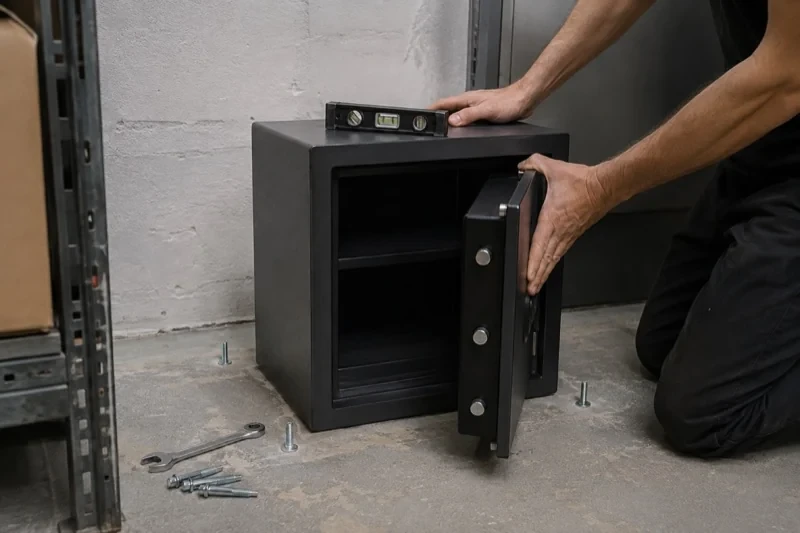
Discuss the contents, intended location and relevant burglary or fire rating with the provider. Ask about the proposed safe, access for delivery, anchoring suitability and any constraints at the property. Agree on installation and operating checks, credential handover and maintenance information before arranging the work.
What may be involved
- rated safe
- anchor bolts
- mounting plate
- bolt-work lubricant
- lock batteries
Ask the provider to distinguish existing parts to inspect, proposed replacements, and tools, materials or reports included in the service. Confirm the work and exclusions after assessment; this list does not mean that every item will be supplied or replaced.
LOCAL RESEARCH / Chinatown
Building history
The area rebuilt on its original site after 1906, and some buildings reused original brick; its historic fabric includes many early post-earthquake structures.
Source ↗Housing context
The Chinatown Area Plan describes predominantly low, small-scale buildings, with many buildings relatively short in depth because of the lot pattern. This describes the district’s built form, not the equipment or condition of an individual property.
Source ↗Local exposure
The City identifies Chinatown as comparatively sunny and sheltered from wind, rather than treating it as a typical fog-exposed district.
Source ↗Local context
The plan records more than 250 historically or architecturally important early post-earthquake buildings, so preservation-sensitive work is a realistic consideration.
Source ↗Area-wide context does not establish the condition of your property or equipment.
Before the visit
Tell us the lock type, your location and whether you still have a working key.